WP Legends Live Panel on March 11th: The Line Between Good and Great Agencies

The CheckView REST API gives you programmatic access to manage websites, test flows, test runs, UX audits, teams, and notifications. Use it to integrate CheckView into your CI/CD pipelines, build custom dashboards, or automate your testing workflows.
The API includes 101 public endpoints across 11 resource groups. Infrastructure endpoints for health monitoring (/health, /health/ready, /health/live) are also available but are not covered in the endpoint reference.
The API uses Personal Access Tokens (PATs) for authentication. All tokens use the cvpat_ prefix.
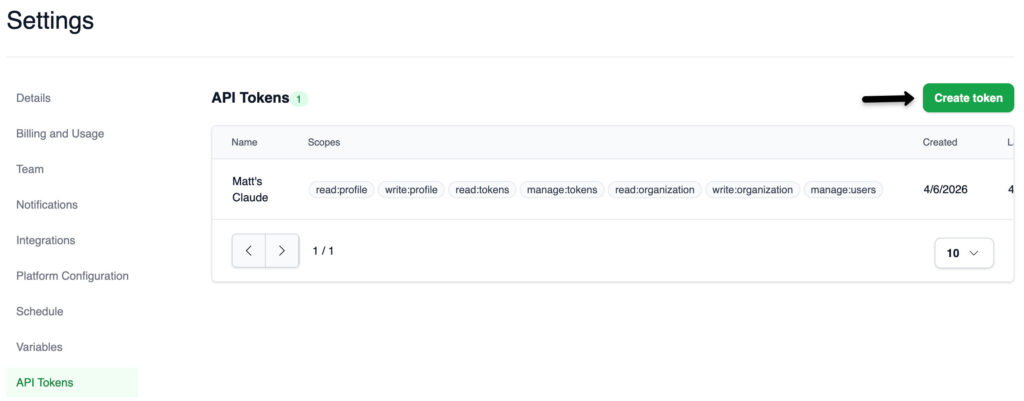
Tokens created from the dashboard receive your full user permissions automatically. If you need restricted scopes, you can create tokens with specific scopes via the API directly.
Include the token in the Authorization header of every request:
Authorization: Bearer cvpat_your_token_hereTokens can be scoped to limit access:
read:profile, write:profile – View and update your user profileread:organization, write:organization – View and manage organization resources (websites, test flows, test runs, audits)read:tokens, manage:tokens – View and manage API tokensmanage:users – Manage team members and invitations (admin role required)API requests are rate-limited per organization:
| Plan | Requests per Minute |
|---|---|
| Any paid plan | 60 |
| No active subscription | 10 |
The 60 req/min limit is generous enough for typical usage including MCP sessions, CI/CD pipelines, and dashboard integrations. We may raise limits in the future as we monitor real-world usage patterns. If you have a use case that genuinely requires higher throughput, contact support.
Every authenticated response includes rate limit headers:
X-RateLimit-Limit – Maximum requests allowed per minuteX-RateLimit-Remaining – Requests remaining in the current windowX-RateLimit-Reset – Unix timestamp when the window resetsRetry-After – Seconds to wait (only on 429 Too Many Requests)Write operations (POST, PATCH, DELETE) support idempotency to prevent duplicate actions. Include an Idempotency-Key header with a unique value (e.g., a UUID) on any write request. If you send the same key within 60 minutes, the API returns the cached response instead of executing the operation again.
Idempotency-Key: 550e8400-e29b-41d4-a716-446655440000List endpoints return paginated results using cursor-based pagination. Response headers include:
X-Next-Cursor – Pass this value as the cursor query parameter to fetch the next pageX-Has-More – true if more results exist beyond the current pageX-Total-Count – Total number of results (when available)Use the limit parameter to control page size (default: 20).
Errors follow the RFC 7807 Problem Details format:
{
  "type": "https://api.checkview.io/errors/not-found",
  "title": "Not Found",
  "status": 404,
  "detail": "The requested test flow does not exist.",
  "instance": "/api/v1/test-flows/abc-123"
}
Common status codes: 200 (success), 201 (created), 204 (no content), 400 (bad request), 401 (unauthorized), 403 (forbidden), 404 (not found), 429 (rate limit exceeded).
The full endpoint reference is organized across three pages: